
Mantel Clock Guide: Styles, Chimes, Placement and Care
From the tambour 'Napoleon hat' to Art Deco designs, here is how to choose, place and look after a mantel clock.
In this article
A mantel clock is the easiest way to bring the character of a traditional clock into a room without giving up floor or wall space. It sits on a shelf, sideboard or fireplace mantel, and the best ones become a quiet focal point. Here we walk through the main styles, how chiming mantel clocks work, where to place one, and how to care for it through a Canadian year.
What Makes a Mantel Clock Different
A mantel clock is a shelf clock designed to stand on a mantelpiece or similar surface. It is larger and more decorative than a typical desk clock, and many have a chime or strike. Because there is no room for a long hanging pendulum or weights, mechanical versions are usually spring-driven, with a short pendulum or a balance wheel regulating the time.
Compared with a floor clock, a mantel clock is:
- Far smaller and easier to move.
- Usually spring-driven rather than weight-driven.
- More affordable for a comparable quality of movement.
- Easier to fit into apartments, condos and smaller rooms.
If you are weighing a mantel clock against a full-size floor clock, our grandfather clock buying guide explains what a tall case adds in terms of movement, chime and presence.
Classic Mantel Clock Styles
Mantel clocks come in a handful of recognizable shapes. Knowing the names helps when you are browsing listings or talking with a dealer.
Tambour, the “Napoleon hat”
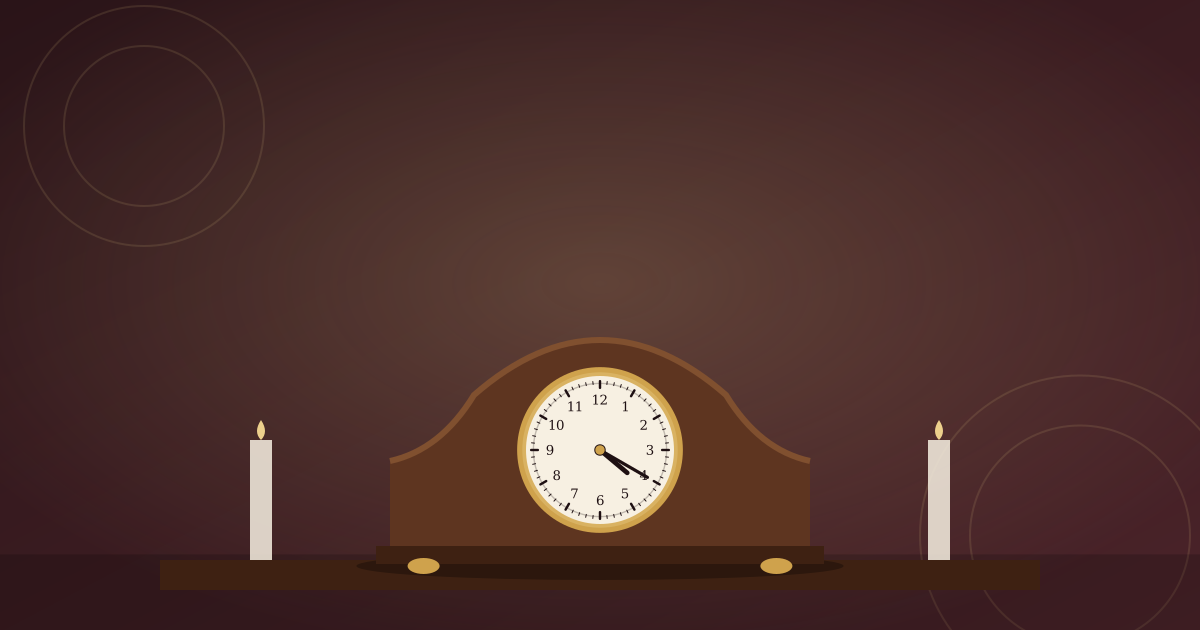
The tambour clock has a low, wide base with a rounded hump in the centre, a silhouette often nicknamed the “Napoleon hat.” It became very popular in the early 20th century and is probably the shape most people picture when they hear “mantel clock.” Wood cases in mahogany or walnut tones are typical, often with a brass bezel and a simple dial.
Bracket clocks
Bracket clocks originated in England in the 17th century. Despite the name, they were portable table clocks, often with a carrying handle on top; some were set on matching wall brackets. They tend to have an upright, architectural case with an arched or bell-shaped top, and they suit traditional rooms well.
Carriage clocks
Carriage clocks are small, brass-framed clocks with glass panels and a top handle, developed in France in the 19th century for travel. Many let you see the movement through the side and top glasses. They sit happily on a narrow mantel but are just as at home on a desk; we cover them more fully in our table clock guide.
Art Deco and mid-century designs
Art Deco mantel clocks from the 1920s and 1930s use strong geometry, stepped forms, chrome, marble and contrasting veneers. Mid-century pieces lean toward clean lines and lighter woods. Both styles work well in modern homes where a tambour might feel too traditional.
| Style | Look | Typical materials | Suits |
|---|---|---|---|
| Tambour | Curved “hump” top | Wood, brass bezel | Traditional, cottage |
| Bracket | Upright, arched top | Wood, brass fittings | Formal rooms |
| Carriage | Small, glass panels | Brass, glass | Desks, narrow shelves |
| Art Deco | Geometric, stepped | Marble, chrome, veneer | Modern, eclectic |
| Contemporary | Minimal | Metal, glass, light wood | Condos, offices |
Chiming Mantel Clocks
A chime is what makes many people fall for a mantel clock. Mechanical chiming movements play a melody on rods or bells, usually at the quarter hours, and strike the hour count on the hour.
The most common melodies are:
- Westminster, the familiar four-note pattern associated with the Great Clock at the Palace of Westminster.
- Whittington, a brighter, more cascading tune.
- St. Michael, a longer peal-like sequence.
Some movements offer two or three of these with a selector. German makers such as Hermle and Kieninger produce many of the mechanical chiming movements found in mantel clocks. An 8-day movement needs winding about once a week; a chiming clock usually has three winding arbours (time, strike and chime), while a striking-only clock has two.
Quartz chiming mantel clocks use recorded chimes instead. They cannot match the sound of real rods, but they are accurate, need no winding and often have volume control and automatic night silencing, which is useful in condos or open-plan homes.
Living with a chime
Before buying, think about where you will hear it. A chime that sounds lovely in a living room can be intrusive near a bedroom. Look for a clock with a silent setting or night shut-off if that matters to you, and ask the seller to demonstrate it.
Choosing the Right Size and Placement
A mantel clock should look like it belongs on its surface, neither swamped nor overhanging. As a rough guide, measure the depth of your mantel or shelf first, then allow a few centimetres of clearance at the front and back.
- Measure the surface. Many tambour clocks need roughly 12 to 18 cm (5 to 7 in) of depth; bracket clocks can need more.
- Check the height. Make sure the clock clears any mirror, artwork or the shelf above.
- Find a level spot. A mechanical clock with a pendulum must sit level to stay in beat.
- Think about heat. Avoid placing a mechanical clock directly above a working wood or gas fireplace, or over a heating vent.
- Consider the view. A dial at or slightly below eye level when you are seated is easiest to read.
In Canadian homes, the mantel can be one of the most hostile spots in winter. Heat rises from the firebox, forced-air heating dries the room, and temperature swings are common. Wood cases can shrink and joints can loosen in very dry air. If your mantel sees a lot of fire use, a quartz clock is a sensible choice there, and a mechanical clock may be happier on a sideboard or bookcase.
Buying New, Vintage or Antique
New mantel clocks range from inexpensive quartz models to finely made mechanical chiming clocks. Prices vary widely: quartz pieces are often modest, while a quality mechanical chiming mantel clock typically runs from a few hundred to well over a thousand dollars CAD, depending on movement and case.
Vintage and antique mantel clocks are widely available in Canada through estate sales, auctions and specialist dealers. Many 20th-century tambour clocks turn up at reasonable prices. When looking at an older clock, check:
- Whether the movement runs, strikes and chimes as it should.
- That the case is free of major cracks, loose veneer or replaced parts that do not match.
- Whether the key, pendulum and any back door are present.
- Signs of overwinding or a broken mainspring (a clock that will not take a wind).
Many of the same principles apply to tall clocks; our article on buying an antique grandfather clock goes deeper into checking originality and condition.
If you are buying from the US or Europe, factor in shipping, possible duties and taxes, and careful packing. Mechanical clocks should travel with the pendulum removed or secured.
Caring for a Mantel Clock
Good care keeps a mantel clock running for decades.
| Task | How often | Notes |
|---|---|---|
| Winding | Weekly (8-day) | Stop at firm resistance |
| Dusting the case | Weekly or as needed | Soft, dry cloth |
| Checking level | After moving or cleaning | Listen for even beat |
| Oiling | Roughly every 3–5 years | By a clockmaker |
| Full cleaning | When oil has thickened | Professional service |
A few habits make a real difference:
- Wind at the same time each week so you do not forget.
- Move the hands gently and follow the manufacturer’s advice on whether they can be turned backward.
- Keep it out of direct sun, which fades finishes and dials.
- Control humidity in winter with a humidifier if your home gets very dry.
- Remove or secure the pendulum before moving the clock, even short distances.
For repairs, look for an experienced local clockmaker. A Canadian NAWCC chapter or a horological association can be a good place to ask for recommendations.
Final Thoughts: Picking a Mantel Clock You Will Keep
Start with the style that suits your room, whether that is a classic tambour, a formal bracket clock or a crisp Art Deco piece. Then decide whether you want a mechanical movement with a real chime or a low-maintenance quartz model, and check that your chosen spot is level and away from heat. If the Roman dial is part of the appeal, our piece on the Roman numeral clock face explains the traditions behind it. Chosen with a little care, a mantel clock is the kind of object that stays in a family for generations.
Frequently Asked Questions
Can I put a mantel clock above a working fireplace?
You can, but heat, soot and rapid temperature swings are hard on wood cases and movements. If you use the fireplace often, consider a quartz clock for the mantel or move a mechanical clock elsewhere during the heating season. At minimum, keep the clock well back from the opening and away from rising heat.
How do I silence the chime on a mantel clock at night?
Many chiming mantel clocks have a lever or a selector on the dial or side marked for chime and silent. Some quartz models have an automatic night-off feature. If your clock has no silencing option, a clockmaker may be able to advise on whether one can be fitted.
What does a spring-driven mantel clock need to keep running?
It needs regular winding, usually once a week for an 8-day movement, and a stable, level surface. Periodic oiling and cleaning by a clockmaker keep the springs and gears in good order. Avoid overwinding by stopping as soon as you feel firm resistance.
Is an older mantel clock worth repairing?
Often yes, especially if the case is solid and the movement is complete. Repair costs vary with the movement's condition and complexity, so ask a clockmaker for an estimate before committing. Sentimental value is a perfectly good reason to restore a family clock.