Large Wall Clocks: Sizing, Styles and Safe Mounting Guide
How big a wall clock should be, which oversized styles suit which rooms, and how to mount a heavy clock safely in drywall, plaster or brick.
In this article
Large wall clocks do something few other decor pieces can: they fill a big, empty wall, give a room a focal point and stay useful every minute of the day. The catch is that scale is easy to misjudge, and an oversized clock that’s too small, too low or poorly anchored looks wrong or, worse, ends up on the floor. Here’s how to choose the right size, pick a style that suits the room and mount it securely in any wall a Canadian home is likely to have.
How to Size Large Wall Clocks
The most common mistake is buying too small. A 40 cm clock that looks generous in a store becomes a dot on a 4 metre wall. Use these rules of thumb as a starting point, then check with a paper template.
Over Furniture
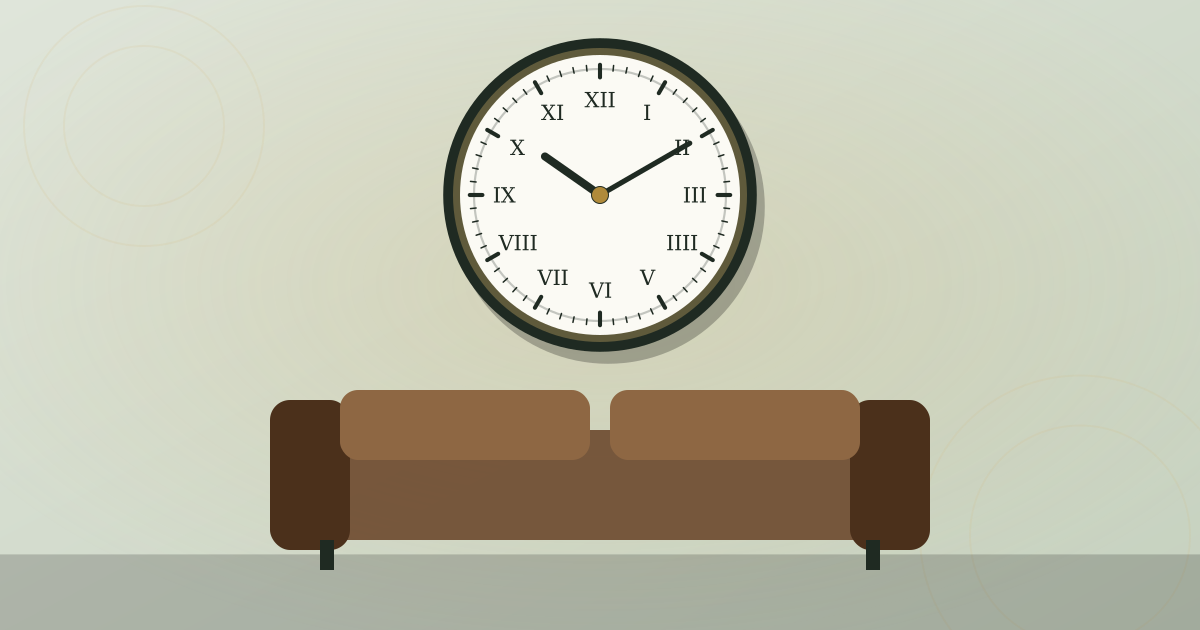
When a clock hangs above a sofa, sideboard, bed or fireplace, aim for a width somewhere between about half and two-thirds of the furniture below. A 2.1 m (about 7 ft) sofa pairs well with a clock somewhere around 90 to 120 cm (36 to 47 in) across. Leave roughly 20 to 30 cm (8 to 12 in) between the top of the furniture and the bottom of the clock.
On a Bare Wall
On an open wall, the clock should hold the space without crowding it. A rough guide is a clock covering about a third to a half of the wall’s width for a single feature piece, less if you plan shelves or art nearby.
Hanging Height
For a wall with nothing beneath it, centre the clock around 145 to 155 cm (57 to 61 in) from the floor, the same height many galleries use for art. In rooms with tall ceilings, you can raise it, but keep it readable from where people sit or stand.
| Wall or furniture width | Suggested clock diameter |
|---|---|
| 1.2 m (4 ft) | 60–75 cm (24–30 in) |
| 1.8 m (6 ft) | 75–90 cm (30–36 in) |
| 2.4 m (8 ft) | 90–120 cm (36–47 in) |
| 3 m+ (10 ft+) | 120 cm+ (47 in+) |
The Paper Template Test
Cut a circle (or rectangle) of kraft paper or cardboard to the size you’re considering and tape it to the wall for a day or two. Look at it from the doorway, the sofa and across the room. It’s the cheapest way to avoid a return.
Popular Styles of Oversized Wall Clocks
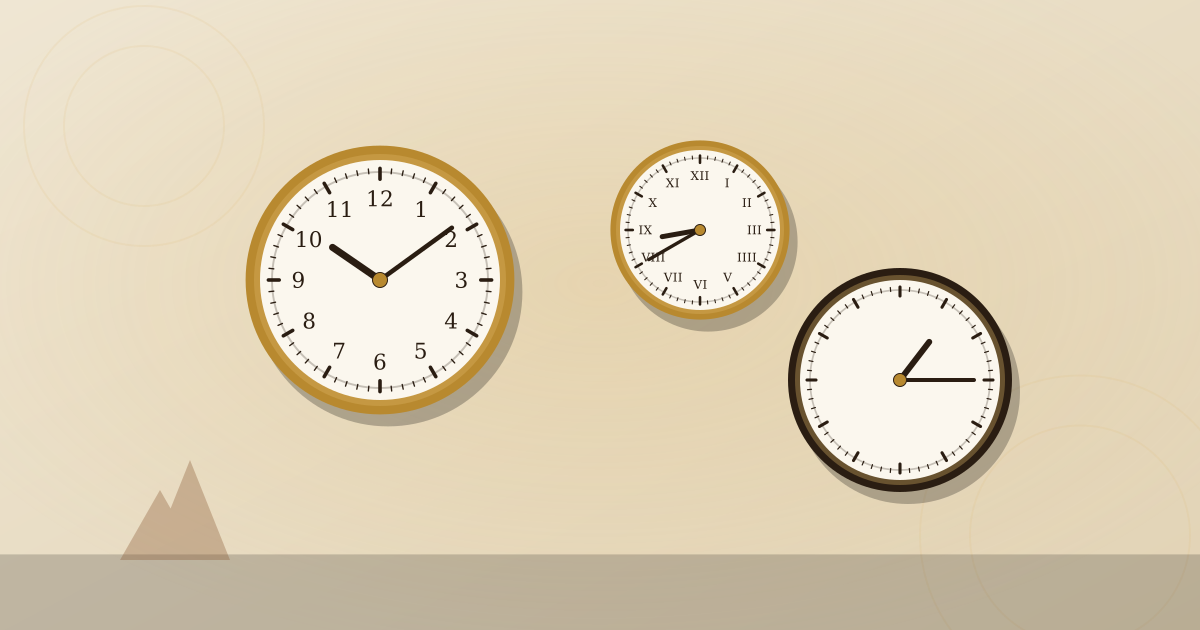
Large clocks come in a wider range of looks than most people expect.
- Open-frame or skeleton. Metal numerals and hands mounted directly to the wall, with no solid face. The wall colour shows through, so they feel lighter than their size.
- Farmhouse and rustic. Distressed wood or metal faces, often with Roman numerals. They suit cottages, kitchens and family rooms.
- Industrial. Exposed gears, riveted metal and railway-station styling, at home in lofts and converted spaces.
- Mid-century and minimalist. Clean dials, few or no numerals and slim hands, good for modern condos.
- Station and gallery clocks. Bold, high-contrast dials designed to be read from across a room.
Roman numerals are especially common on oversized clocks because they read well at a distance and suit both classic and rustic decor. Our post on the Roman numeral clock explains why many of these dials use IIII instead of IV. For more distinctive designs, see our roundup of unique wall clocks in Canada.
Movement Matters on Big Clocks
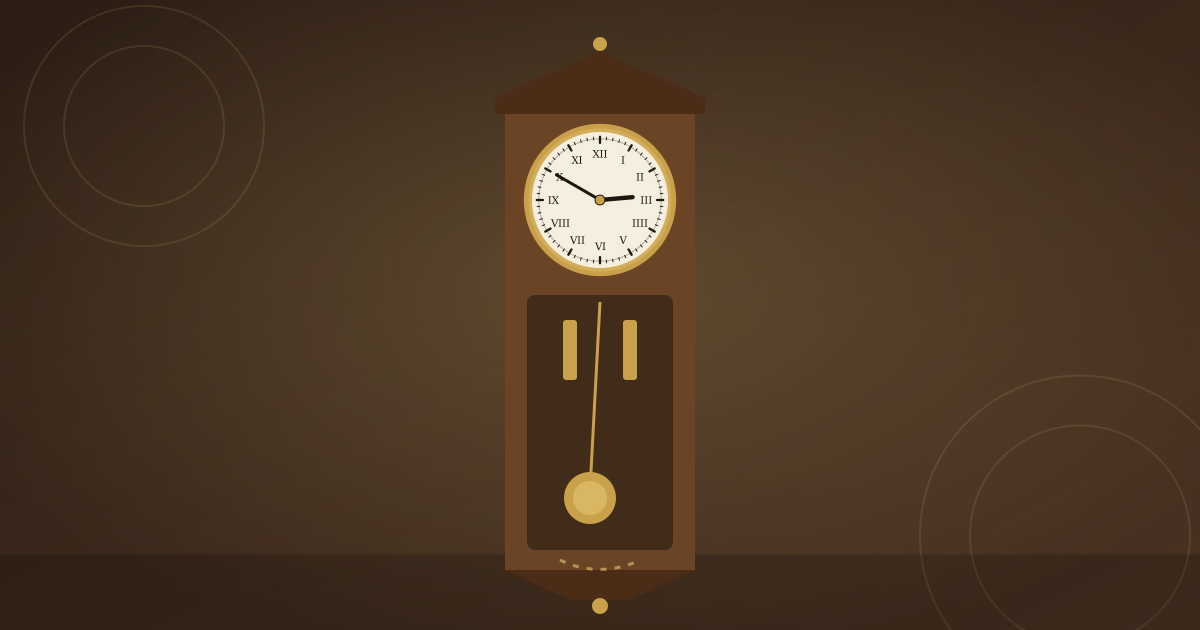
Most large wall clocks use a quartz movement, and long hands need a high-torque movement to turn reliably. A standard movement may struggle to lift heavy hands on the climb from 6 to 12, causing the clock to lose time or stop. A silent sweep movement avoids the audible tick that can be noticeable in a quiet room. Mechanical large clocks exist too, mostly as pendulum regulators; our guide to the pendulum wall clock covers those.
Mounting Large Wall Clocks Safely
Check the clock’s weight before you buy fixings. Open-frame clocks may weigh only a couple of kilograms, while solid wood or metal clocks can weigh far more. Always follow the manufacturer’s instructions and choose hardware rated well above the clock’s weight.
Drywall
Most Canadian homes built in recent decades have drywall over wood or steel studs, typically spaced about 40 cm (16 in) on centre.
- Use a stud finder to locate a stud near your planned position.
- If a stud lines up, drive a wood screw directly into it. This is the strongest option.
- If not, use a properly rated anchor: threaded self-drilling anchors for light clocks, toggle bolts or snap toggles for heavier ones.
- For wide or heavy clocks, use two fixing points or a French cleat to spread the load and keep the clock level.
Avoid plain plastic expansion plugs in drywall for anything heavy; they can pull out over time.
Plaster and Lath
Older homes, common in many Canadian city neighbourhoods, often have plaster over wood lath. Plaster is harder and more brittle than drywall.
- Put painter’s tape over the spot before drilling to reduce chipping.
- Drill a pilot hole slowly with a sharp bit, without the hammer setting.
- Screwing into a stud is best; failing that, toggle bolts that bridge the lath work well.
- Hanging from a picture rail, if your home has one, avoids drilling entirely for moderate weights.
Brick and Concrete
Brick feature walls and concrete condo walls are strong but need the right tools.
- Use a hammer drill and masonry bit.
- Drilling into the mortar joint is easier and simpler to patch, though brick itself holds well too.
- Use masonry plugs or sleeve anchors sized to the screw.
- Check for wiring or plumbing before drilling into any wall.
| Wall type | Best fixing | Tool |
|---|---|---|
| Drywall over stud | Wood screw | Drill/driver |
| Drywall, no stud | Toggle bolt | Drill/driver |
| Plaster and lath | Screw into stud or toggle | Drill, low speed |
| Brick or concrete | Masonry plug or sleeve anchor | Hammer drill |
A Note on Canadian Climate
Wooden cases on large wall clocks react to the dry air from forced-air heating in winter and the humid air of summer. Keep wood clocks away from heating vents, fireplaces and direct sun, and expect slight movement in frames over the seasons. Battery life can also suffer in cold rooms such as unheated sunrooms or cottages left closed for winter.
Large Wall Clocks Room by Room
Living Room
The living room is where large wall clocks shine. Above the sofa or fireplace, a big clock works as the main art piece. If your fireplace has a TV above it, place the clock on a side wall instead; two focal points compete.
Kitchen and Dining Room
A clock readable from the stove or table is genuinely useful here. Choose easy-to-clean finishes and avoid hanging wood clocks directly above the range, where heat and steam can damage them.
Entryway and Stairwell
Tall foyers and stairwell walls are often wasted space. An oversized clock adds interest and is seen by everyone coming home. Hang it where it can be read from the door, not only from the landing.
Bedroom and Home Office
Pick a silent sweep movement. A ticking second hand that’s charming in the kitchen can be maddening at midnight or during a video call.
Final Thoughts: Measure Twice, Anchor Once
Start with the wall, not the clock. Measure the space, test a paper template, and choose a diameter that suits the furniture below. Pick a style that suits the room, insist on a high-torque or silent movement for big hands, and match your fixings to both the clock’s weight and the wall behind it. Get those three things right and a large wall clock will look intentional, run reliably and stay exactly where you hung it. For broader advice on movements, shopping and shipping, see our guide to wall clocks in Canada.
Frequently Asked Questions
How big is a large wall clock?
Most retailers call anything around 60 cm (24 in) across or more a large wall clock, and oversized pieces often run 76 to 120 cm (30 to 47 in). What feels large depends on the wall, so measure your space rather than relying on the label.
Can I hang a large wall clock with a single nail?
It's not a good idea. Even a lightweight oversized clock puts leverage on its hanger, and a nail can work loose over time. Use a screw into a stud or a properly rated anchor, and for heavier clocks use two fixing points.
Why does my large wall clock lose time or stop at certain positions?
Long hands are heavy, and a standard quartz movement may not have enough torque to lift them past the 9 o'clock position. Look for a high-torque movement designed for long hands, check that the hands aren't rubbing each other or the dial, and replace the battery with a fresh one.
Are large wall clocks loud?
Many large quartz clocks have a visible ticking second hand that you can hear in a quiet room. If noise matters, choose a silent sweep movement or a design without a second hand, especially for bedrooms and offices.