The Complete Grandfather Clock Buyer's Guide for Canadian Homes
Everything you need to know before buying a grandfather clock: how they work, which movement and chime to choose, where to put it and what to budget.
In this article
A grandfather clock is one of the few pieces of furniture that can outlive the house it stands in. Before you commit to one, it helps to understand what you are paying for: the movement, the chime, the case and the way it will live with your floors, ceilings and Canadian climate. This guide walks through each of those decisions in the order we would make them ourselves.
What Makes a Grandfather Clock a Grandfather Clock
The proper name is a longcase clock: a weight-driven pendulum clock housed in a tall, freestanding case. The style emerged in England in the late 1600s, after the anchor escapement (around 1670) made it practical to use a long pendulum swinging through a small arc. A pendulum of roughly 99 cm (about 39 in.) beats once per second, which is why so many longcase clocks are tall enough to hide one.
The nickname came later. Henry Clay Work’s 1876 song “My Grandfather’s Clock” was so popular that “grandfather clock” replaced “longcase” in everyday speech, and the name has stuck ever since.
The Main Parts
- Hood: the top section that frames the dial, often with a crown or pediment.
- Dial: painted, brass or silvered, sometimes with a moving moon-phase disc in the arch.
- Movement: the brass gear train behind the dial that keeps time and drives the chime.
- Trunk (waist): the long middle section that houses the weights and pendulum, often with a glass door.
- Base (plinth): the bottom section that gives the clock stability.
- Weights and pendulum: the weights supply power as they descend; the pendulum regulates the release of that power.
Choosing a Movement
The movement is the heart of the clock, and it matters more than the wood. Here are the main types you will see.
| Movement type | Winding | Typical feature | Best for |
|---|---|---|---|
| Mechanical 8-day, cable-driven | Weekly, with a crank | Three weights, full chime | Most buyers |
| Mechanical 8-day, chain-driven | Weekly, by pulling chains | Simpler winding | Owners who dislike cranks |
| Mechanical 1-day (30-hour) | Daily | Often single weight, antique | Collectors |
| Quartz with chime | Battery change | Recorded or electronic chime | Low maintenance |
Most new floor clocks use 8-day, cable-driven mechanical movements with three weights: one for timekeeping, one for the hourly strike and one for the quarter-hour chime. German makers such as Hermle and Kieninger have long supplied movements to case makers around the world, so you will often see their names stamped on the back plate. A known movement maker is helpful because parts and expertise are easier to find.
Quartz floor clocks need little care, but if you want the full experience, go mechanical.
Understanding Chimes
Most chiming floor clocks offer one or more of three classic melodies:
- Westminster: the familiar four-note sequence associated with the Palace of Westminster clock tower. By far the most common.
- Whittington: a brighter, more cascading sequence with a traditional English character.
- St. Michael: a lively, bell-like chime that sounds a little busier than Westminster.
Clocks with a selector let you switch between them, and many include a silent setting. Chimes are produced either by hammers striking tuned rods (the most common today) or by tubular bells, which are larger, louder and usually found on premium cases. If you live in a condo or have light sleepers at home, look for a night shut-off that mutes the chime overnight.
Sizing Your Grandfather Clock to the Room
Height is the measurement that catches people out. Many floor clocks stand roughly 190 to 215 cm (about 75 to 85 in.), and grander pieces can be taller. Check your ceiling height, but also look out for crown mouldings, sloped ceilings, low door frames and stair landings where you might want to place it.
| Room ceiling | Comfortable clock height | Notes |
|---|---|---|
| 2.4 m (8 ft) | Up to about 205 cm (81 in.) | Leaves breathing room above the crown |
| 2.7 m (9 ft) | Up to about 230 cm (90 in.) | Most standard models fit |
| 3 m+ (10 ft+) | Tall or tubular-bell cases | Grand foyers and great rooms |
A typical case is roughly 45 to 60 cm (18 to 24 in.) wide at the base; mock it up with painter’s tape to see how it reads in the room.
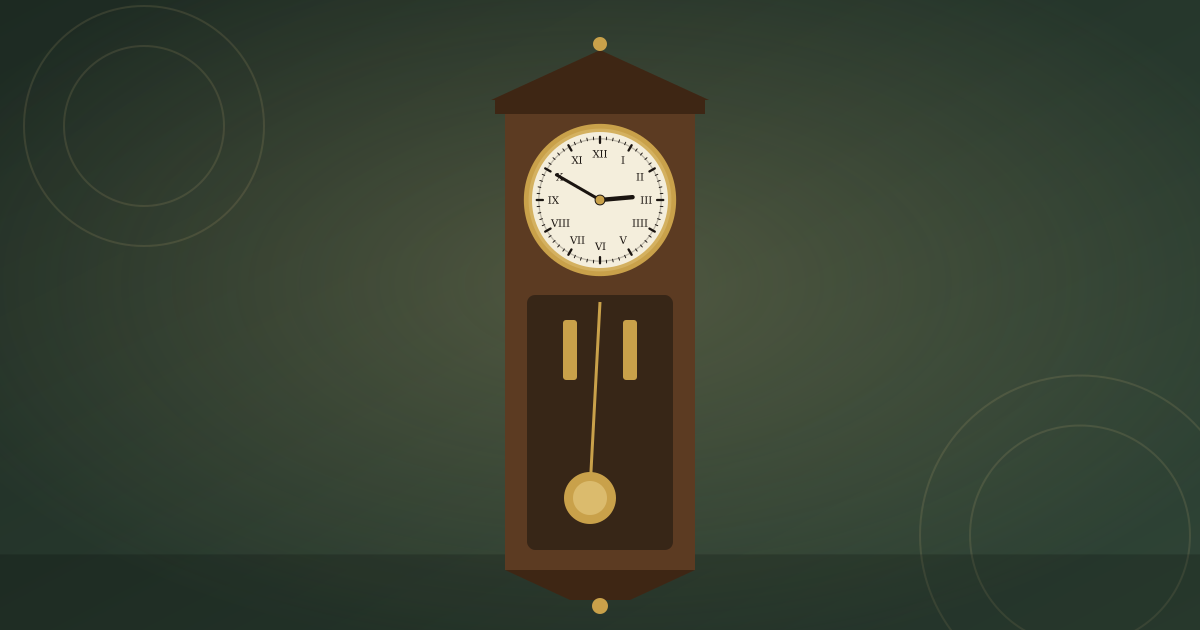
If space is the issue, a wall-hung regulator can give you the same look in a smaller footprint. We cover those in our post on the grandfather wall clock as a small-space alternative.
Placement and the Canadian Climate
Where you stand a grandfather clock affects how well it keeps time and how long the case lasts.
Floor and Wall
Choose a solid, level floor. A clock that rocks or leans will drift out of beat. Use the levelling feet, and consider anchoring the top of the case to the wall, especially with children or pets at home.
Heat, Sun and Humidity
Canadian homes swing from humid summers to very dry winters, when forced-air heating can pull moisture out of wood. That can cause veneers to lift, doors to stick and joints to open. To reduce the stress on the case:
- Keep the clock away from heat registers, baseboard heaters, fireplaces and wood stoves.
- Avoid direct sunlight, which fades finishes and heats the case unevenly.
- Run a humidifier in winter if your home is very dry; aim for a moderate, steady level rather than big swings.
- Avoid exterior walls that get cold in January if you can.
Sound
A mechanical chime carries. Living rooms, front halls and dining rooms are common choices. Bedrooms usually are not, unless you are very fond of the Westminster chime at 3 a.m.
Budget Tiers: What to Expect
Prices vary widely by maker, materials, movement and whether the clock is new or pre-owned, so treat these as rough bands rather than quotes.
| Tier | Rough price range (CAD) | What you typically get |
|---|---|---|
| Entry | Roughly $1,000 to $3,000 | Quartz or basic mechanical, veneered case |
| Mid-range | Roughly $3,000 to $7,000 | 8-day German movement, selectable chimes, better finishes |
| Premium | Roughly $7,000 and up | Solid hardwoods, tubular bells, fine detailing |
| Antique | Very wide range | Depends on age, maker, originality and condition |
Remember to budget for delivery and setup, which matters with a tall, heavy case. If you are buying from outside your province or from the US, ask about shipping, insurance and any duties or brokerage fees up front, as these can add a meaningful amount.
Well-known brands have their own considerations. Our guide to evaluating a Howard Miller grandfather clock covers what to look for with one of the most familiar names in floor clocks. If you are drawn to older pieces, see our antique grandfather clock guide for advice on dating and valuing them.
Setting Up and Living With Your Clock
Delivery crews often set the clock up for you, but it helps to know the basics:
- Position and level the case, front to back and side to side.
- Hang the pendulum carefully on its suspension spring.
- Hang the weights in the right order. They are usually marked; the heaviest often goes on the right (chime side), but always check your manual.
- Set the time by moving the minute hand clockwise, pausing to let it chime at each quarter if the manual says so.
- Start the pendulum with a gentle push and listen for an even “tick-tock”. If it limps, the clock is out of beat.
To adjust the rate, raise the pendulum bob to make the clock run faster or lower it to slow it down. Small turns of the rating nut make a big difference over a week.
For routine care, wind on the same day each week, dust the case with a soft cloth, avoid spraying polish near the movement and leave oiling to a professional. If you need a repairer, horological associations such as Canadian NAWCC chapters are a good place to start asking.
Final Thoughts: Choosing Well
The best grandfather clock for you is the one that fits your ceiling, your floor and your ears. Start with the movement (an 8-day mechanical from a known maker is a safe default), pick a chime you will still enjoy in ten years, then choose the case that suits your room. Measure twice, plan for winter dryness and budget for delivery and occasional servicing. Do that, and you will have a clock that keeps time for the next generation, too.
Frequently Asked Questions
How often do I need to wind a grandfather clock?
Most modern mechanical floor clocks have 8-day movements, so winding once a week on the same day is the usual routine. Older 30-hour (1-day) movements need winding daily. Winding at a regular time helps keep the rate steady.
Can I turn off the chime at night?
Many chiming floor clocks have a silence lever or an automatic night shut-off that mutes the chime overnight. Check the dial or the side of the case for a selector. If yours has neither, a clockmaker may be able to advise on options for that movement.
How often should a grandfather clock be serviced?
A common recommendation is a cleaning and oiling every few years, with a full overhaul when wear appears. Dry Canadian winters can thicken or dry out old oil, so we lean toward the shorter end of that interval. Your clockmaker can suggest a schedule based on the movement's condition.
Is it safe to put a grandfather clock on carpet?
Yes, as long as the clock is levelled and stable. Thick carpet can let the case rock, so most cases have adjustable levelling feet, and some owners anchor the top of the case to the wall for extra security, especially in homes with children or pets.